Ageing, Biological Age and Healthspan
Chronological age records the time since birth, whereas biological age describes the biological and functional state of cells, tissues and physiological systems relative to what is typically observed at a given chronological age. Two people of the same age can differ substantially in physical function, metabolic health, skin appearance, cognition and susceptibility to disease.
Biological ageing can be assessed through measures ranging from epigenetic and other molecular clocks to blood-based clinical markers, physiological function and physical performance. These measures each capture different aspects of ageing, and their performance is influenced by the populations used to develop and validate them. Different tissues and organ systems can also age at different biological rates within the same individual.
While lifespan describes how long a person lives, healthspan refers to the period of life lived in good health.
Biological ageing can be understood partly as a progressive change in the capacity of cells, tissues and physiological systems to maintain and coordinate their functions, adapt to changing conditions and recover from challenge. What changes over time and why do these changes follow different trajectories?
Flexibility and Homeostasis
Living systems remain healthy through their capacity to maintain homeostasis by adapting to changing conditions. Blood glucose rises after a meal and is subsequently regulated towards its usual range, while cells at the site of a wound coordinate to repair damage. Physiological reserve provides additional capacity when demands increase, and resilience reflects how effectively function is maintained or restored following challenge.
This flexibility can be seen in molecular and cellular responses, tissue repair, organ function and coordination between systems. It also includes maintaining physical mobility, alongside cognitive, psychological and behavioural adaptation.
As biological ageing progresses, the adaptive ranges become more constrained. Responses can become less precisely regulated or coordinated, recovery less complete, and the reserve available to meet further challenge reduced.
The 12 Hallmarks
The Hallmarks of Ageing framework organises ageing biology into twelve interrelated processes that are associated with ageing. They are grouped into primary, antagonistic and integrative categories. Primary hallmarks involve damage and disruption of cellular maintenance. Antagonistic hallmarks include responses that can be adaptive or protective but become detrimental when their activity becomes chronically dysregulated. Integrative hallmarks describe how accumulated cellular damage and dysregulated responses become expressed at tissue and systemic levels. Together, they provide an evolving framework for understanding the biological processes involved in ageing.

Maintaining Biological Integrity
Cells continually sustain damage to DNA, proteins, organelles and other cellular components, and these components also undergo continual turnover. Maintaining function depends on systems that protect the genome, regulate gene activity and remove or replace components that can no longer function properly.
Protecting The Genome
Replication errors, spontaneous chemical reactions, products of normal metabolism and environmental exposures continually challenge DNA. Multiple repair pathways recognise and correct different forms of damage, and cell-cycle checkpoints pause cell division to prevent severely damaged cells from continuing to divide and allow for repair or elimination of the damaged cell.
Genomic damage nevertheless accumulates over time, contributing to genomic instability, a loss of genome integrity reflected in mutations and chromosome abnormalities. Persistent DNA damage can alter cellular behaviour by promoting prolonged cell-cycle arrest or cell death. Mutation burden alone, however, does not explain biological ageing.
Telomeres also protect genomic information. These repetitive DNA sequences and associated proteins cap chromosome ends and prevent them from being recognised as broken DNA. Telomeres shorten with repeated cell division because chromosome ends cannot be completely copied and telomerase activity is too low to fully replace the lost DNA in most cells.
Critically short or otherwise dysfunctional telomeres activate DNA-damage responses and can lead to loss of proliferative capacity or genomic instability. Telomere length varies substantially between tissues and individuals, so it provides information about one aspect of ageing biology rather than functioning as a universal biological-age clock.
Maintaining Appropriate Gene Regulation
Epigenetic alterations affect gene accessibility and expression through DNA methylation, histone modification and the organisation of DNA into chromatin. With ageing, these regulatory patterns change, altering gene expression and weakening the regulation that helps cells maintain their specialised identity and function.
Age-related epigenetic changes are reversible. Experimental studies have demonstrated reversal to youthful levels, with restoration of tissue function. Reductions in epigenetic age have also been demonstrated in human intervention studies.
Characteristic DNA methylation patterns form the basis of epigenetic clocks. Some predict chronological age, while later generations estimate aspects of biological ageing and predict disease risk or mortality.
Maintaining Proteins and Cellular Components
Cellular function also depends on proteostasis, the continual production, folding, repair and removal of proteins. Molecular chaperones help proteins achieve or recover the correct structure, while the ubiquitin-proteasome system identifies and degrades proteins that are damaged, misfolded or no longer required. As proteostasis becomes less effective with ageing, misfolded and aggregated proteins become harder to manage and can disrupt cellular function.
Disabled macroautophagy refers to impaired function of a major lysosome-dependent recycling pathway. During macroautophagy, intracellular material is enclosed within a membrane and delivered to the lysosomal network for degradation and recycling. Autophagy removes damaged proteins, lipids and entire organelles. Mitophagy, the selective removal of mitochondria through autophagy, helps prevent dysfunctional mitochondria from accumulating, disrupting cellular metabolism and promoting inflammation.
As these changes accumulate, cellular maintenance becomes increasingly difficult and the adaptive responses discussed next become less well regulated.
When Adaptation Becomes Maladaptation
The antagonistic hallmarks illustrate how biological processes that normally support growth, adaptation and protection can become detrimental when their regulation is persistently altered.
Deregulated nutrient sensing
Cells continually respond to nutrient availability, energy status and growth signals, adjusting their priorities accordingly. mTORC1 responds to growth signals including insulin and IGF-1, together with nutrient availability. When activated, it promotes protein synthesis, cellular growth and tissue repair. Increased mTORC1 growth signalling also suppresses autophagy and promotes increased inflammatory signalling and cellular senescence. AMPK, in contrast, responds to low cellular energy and shifts activity towards energy production and cellular maintenance including autophagy.
Across model organisms, reduced insulin/IGF-1 signalling and mTORC1 activity, together with increased AMPK activity, are among the most reproducible changes associated with extended lifespan. In mice, inhibition of mTORC1 extends lifespan even when treatment begins relatively late in life.
Sirtuins are NAD+-dependent enzymes that link cellular energy status to maintenance pathways, with roles in gene expression, DNA repair, autophagy, antioxidant defence and mitochondrial metabolism and biogenesis. Because sirtuin activity depends on NAD+, reductions in NAD+ availability can weaken these maintenance responses.
During periods of fasting, reduced nutrient availability shifts cellular activity towards maintenance. Falling nutrient availability reduces mTORC1 activity, activates AMPK, increases sirtuin activity, promotes autophagy and increases reliance on fatty-acid oxidation and ketones. The ketone body β-hydroxybutyrate also acts as a signalling molecule suppressing inflammatory pathways.
Mitochondrial dysfunction
Mitochondria generate most cellular energy (ATP) and also function as signalling organelles. They sense metabolic, hormonal and other cellular conditions and communicate with the nucleus and other cell compartments, influencing gene expression, epigenetic regulation, inflammatory signalling and cellular adaptation. They also regulate the intrinsic pathway of apoptosis, which enables the programmed elimination of damaged or unnecessary cells.
Reactive oxygen species are continuously generated during mitochondrial energy production and also act as signalling molecules. Antioxidant defences help keep these reactive species within a physiological range, but excessive oxidant production relative to antioxidant and repair capacity can damage proteins, lipids and DNA, impair mitochondrial function and further increase oxidative stress.
Mitochondrial quality depends on the balance between biogenesis and mitophagy, together with fusion and fission, which allow mitochondria to exchange contents and help segregate damaged regions for clearance. When these systems no longer maintain a functional mitochondrial population, energy production and metabolic regulation become disrupted, and damaged mitochondria also activate inflammatory signalling.
Mitohormesis describes the adaptive response to a manageable challenge that strengthens cellular maintenance through autophagy, mitochondrial biogenesis and antioxidant defences. Exercise and periods of dietary restriction provide examples of stresses that can stimulate adaptation when they remain within a range the system can accommodate, as can controlled exposure to heat or cold. Challenges that exceed adaptive, repair and clearance capacity contribute to mitochondrial dysfunction.
Cellular senescence
Cellular senescence is a state of stable cell-cycle arrest that arises in response to damage, oncogenic signals or other forms of cellular stress. This response prevents damaged cells from continuing to divide and helps suppress tumour formation. Transient senescence also contributes to tissue remodelling and wound repair.
With ageing, senescent-cell burden increases as more cells enter senescence and immune surveillance and clearance become less effective. Many senescent cells develop a senescence-associated secretory phenotype, or SASP, releasing inflammatory signals and tissue-remodelling factors that alter the surrounding environment. These signals can induce senescence in neighbouring cells, influence immune-cell behaviour and contribute to chronic systemic inflammation.
Experimental clearance of selected senescent-cell populations in mice delays ageing-associated disorders, restores function in several tissues and has extended median lifespan by approximately 25%, supporting a causal contribution of persistent senescent cells to age-related tissue dysfunction.

From Cells to Systems
As cellular damage accumulates and normal responses become less well regulated, the effects are increasingly seen in tissues and physiological systems. The integrative hallmarks describe changes in regenerative capacity, intercellular communication and the tissue environment.
Stem cell exhaustion
Stem and progenitor cells replace cells lost through normal turnover, injury and disease. Their ability to do so depends not only on the cells themselves but also on the surrounding environment or stem-cell niche, which provides signals that regulate their maintenance, activation and differentiation.
With ageing, accumulated DNA damage, epigenetic alterations and mitochondrial dysfunction can impair stem-cell function, while changes in the niche can further restrict regenerative capacity. Stem-cell exhaustion can therefore occur without a decline in stem-cell numbers.
Altered intercellular communication
Cells and tissues coordinate their activities through signalling molecules, direct cell contact and extracellular vesicles. These communication networks allow nearby and distant tissues to respond to changing conditions as part of an integrated system.
With ageing, both the signals produced and the responsiveness of recipient cells can change. Some signalling becomes less precise or effective, while inflammatory and senescence-associated signalling becomes more persistent and can influence nearby and distant cells.
Chronic inflammation
Inflammation is an essential protective response to infection and tissue damage. When appropriately regulated, it helps remove damaged cells, recruit immune cells and initiate repair.
With ageing, however, low-grade inflammatory signalling can become persistent, a pattern often described as inflammaging. Senescent cells, damaged mitochondria and impaired autophagy can all contribute to this inflammatory environment. Age-related changes in immune function can further disrupt inflammatory regulation and immune surveillance, including clearance of senescent cells, reinforcing both inflammaging and senescent-cell persistence.
This pattern of inflammaging is strongly shaped by the environment and lifestyle and is prominent in industrialised populations, reflecting the distinction between chronological age and the biological trajectory of ageing.
Dysbiosis
The microorganisms that inhabit the body, particularly the intestinal microbiome, influence digestion, metabolism, immune regulation and neural signalling. Their composition and activity change with ageing, and disruption of the relationship between microbial communities and their host is referred to as dysbiosis.
The microbiome is shaped by diet, medication, environment and health status. Changes can alter microbial signalling and metabolite production and impair intestinal barrier function, increasing exposure to microbial products that activate immune and inflammatory responses. The microbiome provides one pathway through which diet and other environmental influences can affect ageing biology, and certain microbiome patterns have been associated with healthy ageing.
The Hallmarks Form a Network
Changes in one hallmark can influence several others. For example, impaired mitochondrial quality control can increase inflammatory signalling, which can promote cellular stress and senescence, while senescent cells can further reinforce inflammation through their secretory activity.
These processes progress differently between tissues and individuals, contributing to different ageing trajectories. Understanding those trajectories requires looking beyond the hallmarks themselves.
What Shapes the Trajectory of Biological Ageing?

Nourishment and metabolic signalling
Food provides energy and the raw materials required to build, repair and maintain tissues, with their availability depending on digestion and absorption, and changes in nutrient availability influence whether cellular activity favours growth or maintenance.
Long-term dietary patterns rich in nutrient-dense whole plant foods are consistently associated with lower mortality, lower risk of frailty and with slower epigenetic ageing and reduced biological age. Traditional dietary patterns associated with longevity commonly reflect local and seasonal food availability. Dietary quality influences the biological processes involved in ageing, including mitochondrial metabolism, epigenetic regulation, immune and inflammatory signalling, and the gut microbiome. Through gut-brain signalling, diet also influences brain function and emotional state.
Calorie restriction and fasting extend lifespan and improve healthspan across many model organisms, and human studies show related improvements in metabolic health. Responses to fasting, however, vary with sex, hormonal status, age and nutritional status. Protein quantity and amino-acid composition have also been shown to influence ageing biology, with restriction of specific amino acids showing longevity effects in experimental models.
The timing of food intake is also significant. Time-restricted eating, a form of intermittent fasting, can improve metabolic measures, with food consumed during the body’s usual active phase generally producing more favourable responses than food consumed later, as melatonin rises and the biological night begins. Greater irregularity in meal timing is associated with poorer metabolic outcomes. The relationship between meal timing and circadian organisation is considered further below.
Adequate hydration is fundamental to health, supporting circulation, thermoregulation, kidney function and cellular homeostasis, as well as the body’s continuous processes of detoxification and elimination. Water forms hydration layers around proteins and at membrane surfaces, influencing molecular interactions fundamental to cellular structure and function. Hydration also supports the transport and elimination of metabolic waste and toxins. The liver converts many of these substances into forms that can be removed through the kidneys and intestinal tract, while fibre and adequate nutrition further support this process.
In a large study, a marker of lower hydration status was associated with older biological-age estimates, greater chronic-disease risk and premature mortality.
Movement, muscle and mechanobiology
Regular physical activity is strongly associated with lower mortality and healthier ageing, with substantial benefits seen even when people become more active later in adulthood. Among women aged 65 and over, becoming active after being sedentary was associated with a 48% lower risk of all-cause mortality compared to remaining sedentary. Greater physical activity is also linked to feeling more energetic and positive, and feeling more positive is in turn associated with greater subsequent activity. Physical activity generates mechanical, metabolic, neural and endocrine signals that stimulate adaptive responses throughout the body. Aerobic activity improves cardiorespiratory fitness, while resistance and weight-bearing activity strengthen muscle, bone and connective tissues. Exercise stimulates mitochondrial biogenesis and quality control, supports autophagy and metabolic regulation, and helps regulate inflammatory signalling. It also increases NAD+ levels and sirtuin activity.
Exercise also improves the capacity to deliver and use oxygen through vascular adaptation, increased capillary density within skeletal muscle and greater mitochondrial capacity for aerobic energy production. Movement and muscle contraction promote interstitial-fluid movement and lymphatic flow. Certain breathing practices can also assist lymphatic flow, including through pressure changes affecting the thoracic duct.
Beyond producing movement and force, skeletal muscle plays a major role in glucose regulation and whole-body metabolism. During exercise, contracting skeletal muscle also acts as a signalling organ, releasing myokines that communicate with tissues including bone, adipose tissue, liver and brain, influencing metabolism, inflammatory signalling and tissue adaptation. Cardiorespiratory fitness, muscle strength and gait speed are important integrative markers of physiological reserve and predictors of later health and survival. Exercise also influences communication between muscle and brain. Kynurenine, a metabolite that increases during stress and inflammatory signalling, is converted into kynurenic acid within skeletal muscle, linking exercise to resilience against stress-related neurological effects in experimental models.
Mobility depends on muscle function, joint mobility, balance and connective tissues that can move and transmit force effectively. Fascia forms part of this connective-tissue system and consists largely of extracellular matrix, the structural network surrounding cells. Mechanical forces transmitted through this matrix are sensed by cells through mechanotransduction and converted into biochemical signals that influence gene expression, tissue remodelling and repair.
With ageing, collagen cross-linking, glycation and other changes in extracellular-matrix composition can increase tissue stiffness. This alters the mechanical environment experienced by cells, changing chromatin organisation and stem-cell function, impairing regenerative responses and contributing to cellular senescence. Age-related extracellular-matrix degradation also releases bioactive fragments that act as signalling molecules and activate inflammatory pathways. Regular movement and mechanical loading, however, support healthy extracellular-matrix turnover and remodelling, and healthy glucose regulation helps limit glycation and matrix stiffness.
Maintaining cardiorespiratory fitness, strength, mobility and connective-tissue adaptability preserves physical capability and supports healthspan throughout life.
Sleep, light and circadian organisation
A central circadian clock in the brain receives information about the external light-dark cycle and coordinates daily rhythms throughout the body. Circadian clocks in peripheral tissues regulate the timing of gene expression and metabolic, hormonal, immune and regenerative processes. With ageing, these circadian rhythms can become less robust and coordination between physiological systems less precise. Human studies show that circadian misalignment can markedly disrupt the temporal organisation of gene expression and metabolism.
Sleep is closely linked to circadian timing and provides an important period for physiological restoration. Inadequate sleep duration, poor sleep quality and irregular sleep timing affect metabolic and immune regulation, increase inflammatory signalling and are associated with accelerated biological ageing.
During non-REM sleep, coordinated changes in brain activity, blood flow and cerebrospinal-fluid movement promote fluid exchange within the brain. Human sleep-deprivation studies provide further evidence that sleep contributes to the clearance of soluble proteins and metabolic waste, linking restorative sleep with brain maintenance. Persistent sleep disturbance is associated with greater long-term risk of cognitive decline and neurodegenerative disease, while greater consistency in sleep and wake timing is associated with lower all-cause mortality.
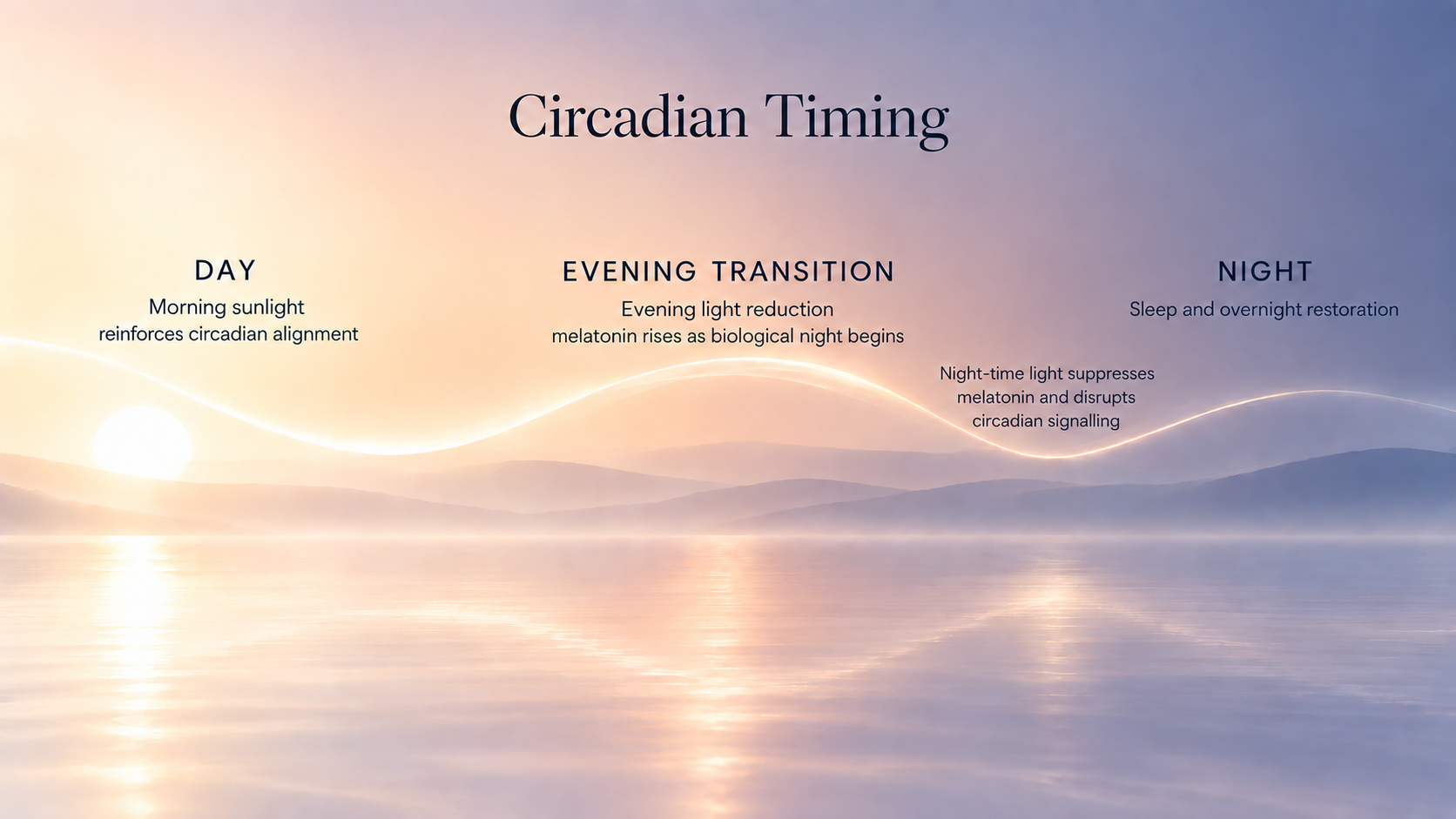
Light is the strongest environmental signal for circadian timing. Specialised light-sensitive cells in the retina relay information about light exposure to the central circadian clock. Morning light, particularly soon after waking, is especially influential in setting circadian timing, while bright daytime light reinforces circadian alignment. Artificial light in the evening and at night suppresses melatonin secretion and disrupts circadian timing. Blue light exposure from electronic screens and other artificial lighting has a particularly strong effect on melatonin suppression and circadian signalling. A large study associated brighter daytime light with lower mortality and greater night-time light exposure with higher mortality.
Beyond circadian signalling, red and near-infrared wavelengths present in sunlight can also interact directly with tissues. In photobiomodulation studies, these wavelengths are absorbed by cellular photoacceptors, including within mitochondria, influencing mitochondrial activity, inflammatory signalling and tissue repair.
Circadian organisation is also reinforced by recurring behaviours such as meal timing, physical activity and sleep-wake patterns. Their timing and regularity help synchronise peripheral clocks and coordinate physiological rhythms across tissues.
Stress, restoration and inner wellbeing
The stress response is an adaptive system that allows the body to respond to physical or psychological challenges. The autonomic nervous system helps regulate involuntary physiological activity through its sympathetic branch, which supports mobilisation during challenge, and its parasympathetic branch, which supports recovery, restoration and digestion. The hypothalamic-pituitary-adrenal axis coordinates a hormonal stress response that leads to cortisol release. When these responses are repeatedly activated or fail to resolve appropriately after the challenge has passed, their effects become detrimental.
Repeated or prolonged stress can affect ageing biology through several pathways. Chronic psychological stress has been linked to increased inflammation, shorter telomeres and accelerated epigenetic ageing, and experimental research also links prolonged stress signalling with mitochondrial dysfunction, DNA damage and cellular senescence. Repeated or prolonged stress can also produce maladaptive neuroplasticity, including structural and synaptic changes in the prefrontal cortex, hippocampus and amygdala, regions involved in decision-making, memory and emotional regulation. Severe physiological stress can transiently increase measures of biological age, with these changes reversing during recovery.
Specific emotional states also influence inflammatory physiology. Experimental induction of self-blame increased shame and pro-inflammatory cytokine activity, with greater increases in shame associated with greater inflammatory responses. Higher optimism and positive affect, in contrast, are associated with lower mortality and more favourable physiological regulation, including lower levels of inflammatory markers. A stronger sense of purpose is also consistently associated with lower mortality and has been linked to lower epigenetic age acceleration, and more positive self-perceptions of ageing are associated with better later function and survival.
Beliefs and expectations can themselves influence physiology. Placebo and nocebo research provides a clear example, showing that expectations and learned associations alter neural signalling and physiological responses across autonomic, endocrine and immune systems. The relationship between body and emotional state is bidirectional, with posture, movement, breathing and other bodily states feeding back through sensory and interoceptive pathways to influence mood and emotional experience.
Psychological and emotional states interact with physiology through continuous two-way communication between the heart and brain. Much of this communication is ascending, with signals from the heart continually relayed to the brain, where they convey the body’s internal state and contribute directly to emotional processing. Slow, paced breathing increases heart-rate variability (HRV), the natural variation in time between successive heartbeats, and promotes synchronisation between cardiac rhythms and brain activity. A smooth and rhythmic HRV pattern is described as HRV coherence. Higher resting HRV is associated with a greater capacity to adapt and recover from stress and with better cognitive performance, while lower HRV is associated with ageing, inflammation and increased mortality. HRV biofeedback displays changes in heart rhythm in real time and has been shown to reduce stress and anxiety and alter brain networks involved in emotional processing.
HeartMath coherence practices build on this physiology by combining slow breathing with heart-focused attention and deliberately generated positive emotional states such as love and appreciation. Studies of these practices show that positive emotional states increase and help sustain both HRV coherence and heart-brain synchronisation. HeartMath describes this as heart-brain coherence. The relationship is reciprocal: changes in breathing and cardiac rhythms influence emotional state, while deliberately generated positive emotions in turn influence the underlying physiological rhythms.
The heart has long been associated with intuition and inner knowing in philosophical and spiritual traditions. HeartMath has also investigated intuitive processing, with studies reporting changes in cardiac and neural activity before randomly selected stimuli. It describes heart intelligence as a form of awareness and intuitive guidance that becomes more accessible as the mind and emotions come into greater coherence with the heart.
Meditation, mindfulness and breathwork have long been used to cultivate presence and a sense of connection with one’s higher self. Studies have associated these practices with reduced stress, improved emotional wellbeing and changes in inflammatory regulation, and meditation has also been associated with more favourable epigenetic-age patterns.
Our inner life affects the biology of stress and recovery.
The menopausal transition
Hormones act as chemical messengers, coordinating activity between distant tissues. As ovarian function declines, reproductive hormone patterns shift substantially, altering signalling throughout the body.
Oestrogen signalling influences several processes relevant to ageing biology. Oestrogen receptors are present in many tissues, within the nucleus, cell membrane and mitochondria in some cells, allowing oestrogen to influence gene expression, mitochondrial biogenesis, energy metabolism and antioxidant defences. As ovarian oestrogen production declines, circulating oestradiol falls, but adrenal-derived androgen precursors can be converted locally into oestrogens in tissues including adipose tissue, skin, bone and brain. This local production becomes more important after menopause. The fall in ovarian oestrogen nevertheless alters the hormonal environment, with effects on inflammatory signalling, bone turnover, skeletal-muscle maintenance and metabolic regulation. Physical activity, nourishment, sleep and restoration continue to influence these ageing-related processes during and after the menopausal transition.
Changes in reproductive hormone signalling also affect the brain and skin. In the brain, altered neurotransmitter signalling influences mood, sleep, cognition and stress responsiveness. In the skin, declining oestrogen signalling contributes to reduced hydration, impaired barrier function and loss of dermal collagen.
The altered hormonal environment also interacts with the gut microbiome. Oestrogens influence microbial communities, while microbial activity in turn influences oestrogen metabolism and recirculation. The estrobolome, the collection of microbial genes involved in oestrogen metabolism, includes genes encoding enzymes that can reactivate oestrogens in the intestine, allowing them to re-enter the circulation and contributing to systemic oestrogen availability.
Women experience the menopausal transition very differently, depending on lifestyle, overall health and psychosocial circumstances. Menopause influences the biology of ageing alongside the many other factors that shape its course.

Environment and the exposome
The exposome describes the cumulative environmental, behavioural and social influences experienced over time and how they affect biological function.
The influences considered earlier in this section form part of the exposome, as do environmental exposures such as air pollution, tobacco smoke, radiation, pesticides, heavy metals, contaminants in drinking water, and chemicals encountered through household products, personal-care products, furnishings and textiles. Research on these exposures has identified biological effects including increased DNA damage, oxidative stress, mitochondrial dysfunction, inflammatory signalling and altered epigenetic regulation. Chronic and nocturnal environmental noise also influences physiology, disrupting sleep and activating stress and inflammatory pathways.
Some exposures have also been associated with accelerated epigenetic ageing, including heavy metal exposure and smoking. In people with alcohol use disorder, one year of abstinence was associated with a reduction in epigenetic age.
Our surroundings can also have restorative effects. Exposure to green and other natural environments is associated with lower mortality and better mental and cognitive health, as well as reduced physiological stress and more favourable autonomic regulation. Negative air ions, found at higher concentrations in forests, mountains and around moving water, have been studied experimentally with some reported effects on mood, stress reduction, and metabolic changes associated with reduced inflammation and oxidative stress.
Social relationships have a substantial influence on health and survival. In a large study, people with stronger social relationships had a 50% greater likelihood of survival. Supportive relationships and social connection are also associated with healthier stress regulation, better cognitive health and lower frailty, while social isolation and loneliness are associated with greater inflammatory activity and accelerated epigenetic ageing.
Over a lifetime, physical, behavioural and social influences can add to biological strain or support resilience.
Healthspan, beyond the cell
Here, healthspan refers not only to preserved physical and cognitive function, but also to the enjoyment of life and the ability to continue living in ways that hold personal meaning and value.
Physical capability and emotional wellbeing support this, as do relationships and intimacy, curiosity and continued learning, creativity, contribution and purpose, and spiritual life or a sense of connection with one’s higher self. Most of these have also been associated with better later-life physical and cognitive health and, in some cases, lower mortality. No single biomarker, however, captures the broader picture of healthspan.
An Ayurvedic Perspective on Ageing
Ayurveda is a traditional medical system dating back several thousand years that encompasses physical, psychological and spiritual aspects of life. Constitution, current state, stage of life, environment and patterns of daily life are all considered together. Prakruti describes an individual’s underlying constitution, while vikruti describes the current state of imbalance. Ayurvedic assessment includes pulse reading, which is used to assess the individual’s current state.
Ageing is understood as a distinct life-stage process, with later life regarded as Vata-dominant. Vata is associated with qualities including dryness, lightness, movement and variability. These age-related tendencies are interpreted alongside individual constitution and current imbalance rather than applied universally. When Vata is increased, greater emphasis is generally placed on regularity and nourishment, warmth, appropriate movement and sufficient rest and restoration.
Digestion is central to Ayurveda. Agni refers to the capacity to digest, assimilate and transform nourishment, as well as to process emotional and mental experience. Healthy agni is fundamental to maintaining balance and health. Food is considered not only for its nutrients, but also for its energetic qualities, including whether it is warming or cooling, light or heavy, drying or oily, together with the individual's digestive capacity and current needs. Calm attention and the state in which food is received is also considered an important part of healthy digestion and assimilation.
The same principle of individualisation applies to movement, which is adjusted according to age, strength and capacity, and extends to mental and emotional state, daily life and the environment. An intervention can therefore have different effects in different people and at different times. Fasting, for example, can be appropriate for one person and excessively depleting for another.
Daily and seasonal rhythms are also important in Ayurveda. Dinacharya, the organisation of daily routine, and ritucharya, the adaptation of routine to seasonal change, encompass sleep and waking, nourishment, activity, restorative practices and other aspects of life. This emphasis on temporal organisation parallels the importance of timing and regularity considered earlier in relation to circadian biology.

Rasayana, one of the eight traditional branches of Ayurveda, is concerned with rejuvenation and the preservation of vitality, cognitive function, strength and healthy tissue function, including the support of ojas, a vital essence associated with strength and vitality and described as having its primary seat in the heart. Rasayana includes foods and herbal preparations, as well as Achara Rasayana, which addresses rejuvenation through behaviour and conduct, including emotional regulation, relationships, moderation, mental qualities and contemplative or spiritual practices.
Studies in older adults have reported significant improvements in areas including physical function, cognition, sleep and quality of life following different Rasayana interventions. Research into individual preparations has also reported effects on processes relevant to ageing biology, including enhanced DNA-repair responses and increased telomerase activity in human studies, while experimental research has identified effects on DNA protection, oxidative and inflammatory signalling, mitochondrial function and stress resistance.
Cleansing and purification also form part of the Ayurvedic approach to restoring balance and supporting rejuvenation. The accumulation of ama is understood within Ayurveda as arising when digestion, assimilation and transformation are impaired, resulting in inadequately eliminated or processed material. Panchakarma is a structured therapeutic purification process involving preparation, individually selected eliminative procedures intended to clear accumulated ama, followed by recovery, restoration and rejuvenation. Preparation commonly includes internal or external oleation, and swedana, the therapeutic use of heat or steam, to open the body's channels and support mobilisation before eliminative procedures.
Clinical literature includes reports of significant improvements in symptoms and function following individualised Ayurvedic treatment, including Panchakarma across a range of chronic conditions, including published cases involving severe and longstanding neurological and musculoskeletal impairment. Alongside these clinical reports, biological studies have examined measurable changes associated with Panchakarma, including reductions in selected persistent organic pollutants, alterations in plasma metabolites and changes in gut microbial patterns.
Ayurveda approaches ageing as one part of a broader and highly individualised view of health. Its emphasis on digestion, nourishment, daily and seasonal rhythms, cleansing, restoration and rejuvenation brings a traditional perspective to several themes discussed earlier in this article. Modern research is only beginning to understand the biological effects of these practices and their significance for ageing and healthspan.
From Understanding Ageing to Extending Healthspan
Understanding the biology of ageing changes the way longevity can be approached. The biological processes involved respond to conditions within and around the body and vary between individuals and over time. These processes can be influenced. Biological function can improve, and age-associated changes can even be reversed. How this understanding is applied will differ according to individual needs and circumstances.
An approach to longevity need not require perfect adherence to a rigid routine. Spontaneity and pleasure remain part of life that healthspan is intended to preserve. Extending healthspan ultimately means being able to continue living fully, with meaning and joy.
Selected Scientific References
Baker DJ, Childs BG, Durik M, et al. Naturally occurring p16Ink4a-positive cells shorten healthy lifespan. Nature. 2016;530:184–189. DOI
Camon C, Garratt M, Correa SM. Exploring the effects of estrogen deficiency and aging on organismal homeostasis during menopause. Nature Aging. 2024;4(12):1731–1744. DOI
Carroll JE, Irwin MR, Levine M, et al. Epigenetic aging and immune senescence in women with insomnia symptoms: findings from the Women’s Health Initiative Study. Biological Psychiatry. 2017;81(2):136–144. DOI
Chaix R, Alvarez-López MJ, Fagny M, et al. Epigenetic clock analysis in long-term meditators. Psychoneuroendocrinology. 2017;85:210–214. DOI
Chatsirisupachai K, de Magalhães JP. Somatic mutations in human ageing: New insights from DNA sequencing and inherited mutations. Ageing Research Reviews. 2024;96:102268. DOI
Colloca L, Barsky AJ. Placebo and nocebo effects. New England Journal of Medicine. 2020;382(6):554–561. DOI
Dey AB, Gambhir IS, Hazra J, et al. Safety and efficacy of Ayush Rasayana A and B in improving functionality of the elderly: a single-arm multicenter study. Journal of the Indian Academy of Geriatrics. 2022;18:49–57. DOI
Dickerson SS, Kemeny ME, Aziz N, Kim KH, Fahey JL. Immunological effects of induced shame and guilt. Psychosomatic Medicine. 2004;66(1):124–131. DOI
Dmitrieva NI, et al. Middle-age high normal serum sodium as a risk factor for accelerated biological aging, chronic diseases, and premature mortality. eBioMedicine. 2023;87:104404. DOI
Ervin SM, Li H, Lim L, et al. Gut microbial β-glucuronidases reactivate estrogens as components of the estrobolome that reactivate estrogens. Journal of Biological Chemistry. 2019;294(49):18586–18599. DOI
Franck M, et al. Nonuniversality of inflammaging across human populations. Nature Aging. 2025;5:1471–1480. DOI
Frankowski DW, Ferrucci L, Arany PR, et al. Light buckets and laser beams: mechanisms and applications of photobiomodulation (PBM) therapy. GeroScience. 2025;47:2777–2789. DOI
Fultz NE, Bonmassar G, Setsompop K, et al. Coupled electrophysiological, hemodynamic, and cerebrospinal fluid oscillations in human sleep. Science. 2019;366:628–631. DOI
Garaulet M, Lopez-Minguez J, Dashti HS, et al. Interplay of dinner timing and MTNR1B type 2 diabetes risk variant on glucose tolerance and insulin secretion: a randomized crossover trial. Diabetes Care. 2022;45(3):512–519. DOI
Goessl VC, Curtiss JE, Hofmann SG. The effect of heart rate variability biofeedback training on stress and anxiety: a meta-analysis. Psychological Medicine. 2017;47:2578–2586. DOI
Gregg EW, Cauley JA, Stone K, et al. Relationship of changes in physical activity and mortality among older women. JAMA. 2003;289(18):2379–2386. DOI
Guruprasad KP, et al. Influence of Amalaki Rasayana on telomerase activity and telomere length in human blood mononuclear cells. Journal of Ayurveda and Integrative Medicine. 2017;8(2):105–112. DOI
Harrison DE, Strong R, Sharp ZD, et al. Rapamycin fed late in life extends lifespan in genetically heterogeneous mice. Nature. 2009;460:392–395. DOI
Harvanek ZM, Fogelman N, Xu K, Sinha R. Psychological and biological resilience modulates the effects of stress on epigenetic aging. Translational Psychiatry. 2021;11:601. DOI
Herron RE, Fagan JB. Lipophil-mediated reduction of toxicants in humans: an evaluation of an Ayurvedic detoxification procedure. Alternative Therapies in Health and Medicine. 2002;8:40–51. PubMed
Holt-Lunstad J, Smith TB, Layton JB. Social relationships and mortality risk: a meta-analytic review. PLoS Medicine. 2010;7(7):e1000316. DOI
Jacobs JM, Maaravi Y, Stessman J. Optimism and longevity beyond age 85. The Journals of Gerontology: Series A. 2021;76(10):1806–1813. DOI
Kelgane SB, Salve J, Sampara P, Debnath K. Efficacy and tolerability of Ashwagandha root extract in the elderly for improvement of general well-being and sleep: a prospective, randomized, double-blind, placebo-controlled study. Cureus. 2020;12(2):e7083. DOI
Kessler CS, Dhiman KS, Kumar A, et al. Effectiveness of an Ayurveda treatment approach in knee osteoarthritis: a randomized controlled trial. Osteoarthritis and Cartilage. 2018;26(5):620–630. DOI
Kim ES, et al. Reduced epigenetic age in older adults with high sense of purpose in life. The Journals of Gerontology: Series A. 2023;78:1092–1099. DOI
Koester J, et al. Niche stiffening compromises hair follicle stem cell potential during ageing by reducing bivalent promoter accessibility. Nature Cell Biology. 2021;23:771–781. DOI
Kresovich JK, Park Y-MM, Keller JA, et al. Healthy eating patterns and epigenetic measures of biological age. The American Journal of Clinical Nutrition. 2022;115(1):171–179. DOI
Lamb DA, Moore JH, Mesquita PHC, et al. Resistance training increases muscle NAD+ and NADH concentrations as well as NAMPT protein levels and global sirtuin activity in middle-aged, overweight, untrained individuals. Aging (Albany NY). 2020;12(10):9447–9460. DOI
López-Otín C, Blasco MA, Partridge L, Serrano M, Kroemer G. Hallmarks of aging: An expanding universe. Cell. 2023;186(2):243–278. DOI
Lu Y, Brommer B, Tian X, et al. Reprogramming to recover youthful epigenetic information and restore vision. Nature. 2020;588:124–129. DOI
Lyckenvik T, et al. Sleep reduces CSF concentrations of beta-amyloid and tau: a randomized crossover study in healthy adults. Fluids and Barriers of the CNS. 2025;22:84. DOI
Mane S, et al. Rectal administration of buttermilk processed with medicinal plants alters gut microbiome in obese individuals. Journal of Diabetes and Metabolic Disorders. 2021;20:1415–1427. DOI
McCraty R, Atkinson M, Bradley RT. Electrophysiological evidence of intuition: Part 2. A system-wide process? Journal of Alternative and Complementary Medicine. 2004;10(2):325–336. DOI
Merzel Šabović EK, Kocjan T, Zalaudek I. Treatment of menopausal skin: a narrative review of existing treatments, controversies, and future perspectives. Post Reproductive Health. 2024;30(2):85–94. DOI
Moazzam S, O’Hagan LA, Clarke AR, et al. The physiology of thoracic duct pressure and flow: a review of the literature. Physiological Reports. 2026;14(2):e70742. DOI
Moqri M, Herzog C, Poganik JR, et al. Validation of biomarkers of aging. Nature Medicine. 2024;30:360–372. DOI
Nashiro K, et al. Increasing coordination and responsivity of emotion-related brain regions with a heart rate variability biofeedback randomized trial. Cognitive, Affective, & Behavioral Neuroscience. 2023;23:66–83. DOI
Oblak L, van der Zaag J, Higgins-Chen AT, Levine ME, Boks MP. A systematic review of biological, social and environmental factors associated with epigenetic clock acceleration. Ageing Research Reviews. 2021;69:101348. DOI
Peters A, Nawrot TS, Baccarelli AA. Hallmarks of environmental insults. Cell. 2021;184(6):1455–1468. DOI
Peterson CT, Denniston K, Chopra D. Identification of altered metabolomic profiles following a Panchakarma-based Ayurvedic intervention in healthy subjects: the Self-Directed Biological Transformation Initiative. Scientific Reports. 2016;6:32609. DOI
Picard M, Shirihai OS. Mitochondrial signal transduction. Cell Metabolism. 2022;34(11):1620–1653. DOI
Poganik JR, et al. Biological age is increased by stress and restored upon recovery. Cell Metabolism. 2023;35:807–820.e5. DOI
Radley J, Morilak D, Viau V, Campeau S. Chronic stress and brain plasticity: mechanisms underlying adaptive and maladaptive changes and implications for stress-related CNS disorders. Neuroscience & Biobehavioral Reviews. 2015;58:79–91. DOI
Rajoria K, Singh SK, Dadhich S. Ayurvedic management in limb girdle muscular dystrophy: a case report. Journal of Ayurveda and Integrative Medicine. 2022;13(1):100486. DOI
Rehder J, Timm I, Berretz G, et al. An individual participant data meta-analysis of how physical activity relates to affective well-being in daily life. Nature Human Behaviour. 2026;10:1297–1315. DOI
Rentscher KE, Klopack ET, Crimmins EM, Seeman TE, Cole SW, Carroll JE. Social relationships and epigenetic aging in older adulthood: results from the Health and Retirement Study. Brain, Behavior, and Immunity. 2023;114:349–359. DOI
Ryoo S-W, Choi B-Y, Son S-Y, et al. Lead and cadmium exposure was associated with faster epigenetic aging in a representative sample of adults aged 50 and older in the United States. Chemosphere. 2025;374:144194. DOI
Schneider E, O’Riordan KJ, Clarke G, Cryan JF. Feeding gut microbes to nourish the brain: unravelling the diet–microbiota–gut–brain axis. Nature Metabolism. 2024;6(8):1454–1478. DOI
Sehgal R, Borrus D, Armstrong JF, et al. Responsiveness of epigenetic aging biomarkers to longevity interventions in humans. Nature Medicine. 2026. Online ahead of print. DOI
Singh SK, Rajoria K. Ayurvedic approach in the management of spinocerebellar ataxia-2. Ancient Science of Life. 2016;35(3):167–172. DOI
Tardy A-L, Pouteau E, Marquez D, et al. Vitamins and minerals for energy, fatigue and cognition: a narrative review of the biochemical and clinical evidence. Nutrients. 2020;12(1):228. DOI
Twohig-Bennett C, Jones A. The health benefits of the great outdoors: A systematic review and meta-analysis of greenspace exposure and health outcomes. Environmental Research. 2018;166:628–637. DOI
Vishwanatha U, et al. Effect of Amalaki rasayana on DNA damage and repair in randomized aged human individuals. Journal of Ethnopharmacology. 2016;191:387–397. DOI
Wang X, Xu Y, Li X, et al. Day-to-day deviations in sleep parameters and biological aging: findings from the NHANES 2011–2014. Sleep Health. 2023;9(6):940–946. DOI
Windred DP, et al. Brighter nights and darker days predict higher mortality risk: a prospective analysis of personal light exposure in more than 88,000 individuals. Proceedings of the National Academy of Sciences of the United States of America. 2024;121:e2405924121. DOI
Xiao S, Wei T, Petersen JD, Zhou J, Lu X. Biological effects of negative air ions on human health and integrated multiomics to identify biomarkers: a literature review. Environmental Science and Pollution Research. 2023;30(27):69824–69836. DOI
Yang Y, Gao X, Just AC, et al. Smoking-related DNA methylation is associated with DNA methylation phenotypic age acceleration: the Veterans Affairs Normative Aging Study. International Journal of Environmental Research and Public Health. 2019;16(13):2356. DOI
Yi J, et al. Elastin-derived extracellular matrix fragments drive aging through innate immune activation. Nature Aging. 2025;5:2380–2398. DOI
Yu R, Duncombe SL, Nemoto Y, et al. Physical activity trajectories and accumulation over adulthood and their associations with all-cause and cause-specific mortality: a systematic review and meta-analysis. British Journal of Sports Medicine. 2025;59(17):1228–1241. DOI
Zindler T, Frieling H, Fliedner L, et al. How alcohol makes the epigenetic clock tick faster and the clock reversing effect of abstinence. Addiction Biology. 2022;27(5):e13198. DOI